SEO & GEO Case Study for a Direct-to-Consumer Niche Home Improvement Brand
Note: Some details in this case study have been generalized to protect client confidentiality. All performance data is real.
Rankings used to be the whole scoreboard. Rank on page one, get the click, get the sale. That scoreboard doesn't tell the full story anymore, not when a growing share of searches never produce a click at all. Visibility is the new currency.
This niche home improvement brand found that out the hard way, and then turned it into their biggest win yet. Over 90 days, from May through July, organic traffic to their site declined 9% year over year. Over that same window, organic revenue grew 76%. The bridge between those two numbers: AI Overview citations, up 151% year to date. This proves that while rankings and traffic still matter today, visibility is the new currency.

Visibility didn't disappear when traffic dropped. It just stopped living exclusively in a click.
The Challenge
This brand built its business on helping customers create healthier living spaces, a category where buyers research heavily before they trust a product enough to bring it into their home. That kind of research used to funnel straight into blog traffic. Now, a lot of it gets answered inside an AI Overview before a reader ever leaves Google, resulting in zero-click searches.
Two things were happening to this brand at once. Their informational blog content, built to answer exactly the questions AI Overviews were now answering directly, was losing clicks to a zero-click search environment. And their main product collection page was steadily losing ground too, not because it fell in the rankings, but because Google increasingly opted to show the homepage or a more specific collection page instead, whenever a query's intent pointed somewhere more precise than a broad product collection page.
That second piece mattered. The natural tendency would be to read the main product collection page losing traffic as a problem to fix. It wasn't. It was Google getting better at matching intent, and matching it to pages other than the one this brand assumed was its front door. Traditional SEO tactics alone weren't built to answer a question like that. Neither was GEO alone. What this brand needed was a strategy built around one goal: get found, everywhere a buyer might be looking, not just on the page ranking for the head keyword.
Step 1: Gave Search Engines a Clearer Picture With Schema Markup
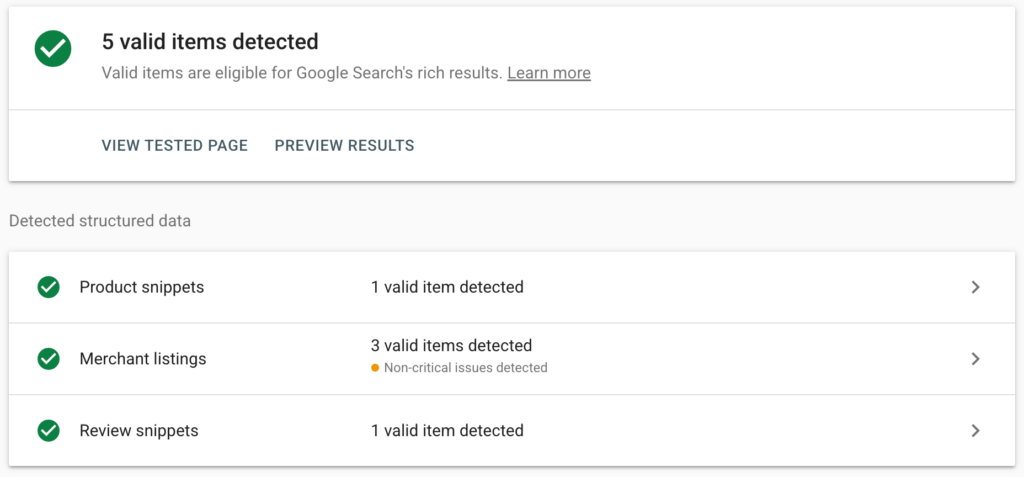
A shopper scanning a product page can tell in seconds what it's made of, what size it comes in, how it stacks up against the other options on the same shelf. Search engines can usually piece that together too, but piecing it together isn't the same as knowing it for certain. Schema markup closes that gap by providing context that removes ambiguity when a search engine is trying to understand key information on a webpage. This is especially important for product details when the goal is earning free Google Merchant Listings, showing up with rich results, or getting cited inside an AI-generated answer.
To support this, we added Schema markup to the brand's product listing pages (PLPs) and product detail pages (PDPs), giving search engines clear signals about how individual product variants relate to one another. This mattered specifically here because this brand sells a small, focused product line across multiple variants that differ by attributes like color and size. Without added clarity, search engines are left to guess whether these pages are variants of the same product or entirely separate ones. Guessing is exactly where trust erodes and visibility gets lost over time.
Step 2: Let FAQ Content Do Double Duty
A tightly targeted PLP built around one primary keyword can rank well and convert well. That's not in question. But shoppers rarely search using that exact term. They search the way they think, such as describing a problem, a use case, or a concern rather than a product name. A PLP optimized narrowly around its head keyword can win that keyword and still miss the wider set of ways real buyers phrase what they're looking for.
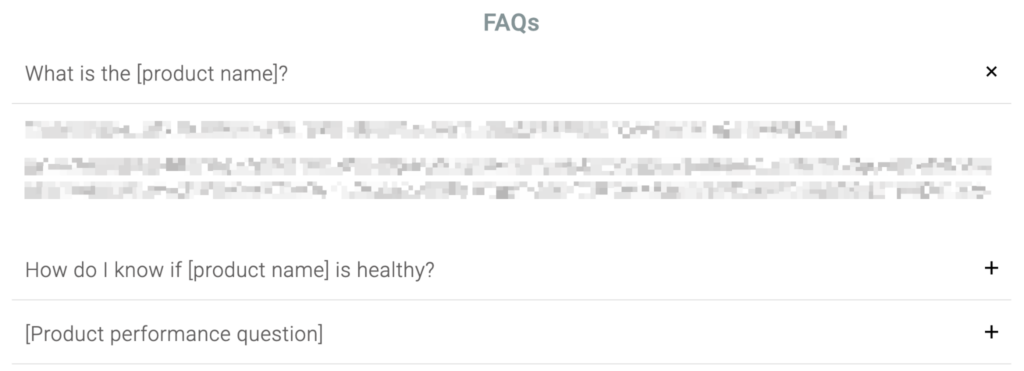
We added FAQ content directly to the brand's PLPs, built around the real, quick questions buyers ask while evaluating a product, not the deeper informational questions better suited to a blog post. That distinction mattered. These are fast, specific answers: durability, application, safety, that kind of thing. That did two things. It let each PLP naturally pick up secondary, semantically related keywords without diluting its primary focus. And it gave AI platforms short, clean, quotable answers to pull from when a shopper asks an LLM one of those same practical questions before buying.
Step 3: Clean Up the Blog to Strengthen the Whole Domain
Not every blog post earns its keep, and content that isn't pulling weight doesn't just sit there quietly. It drags on how search engines evaluate the site as a whole, especially now that AI platforms are also deciding which sources to trust, not just which pages to rank.
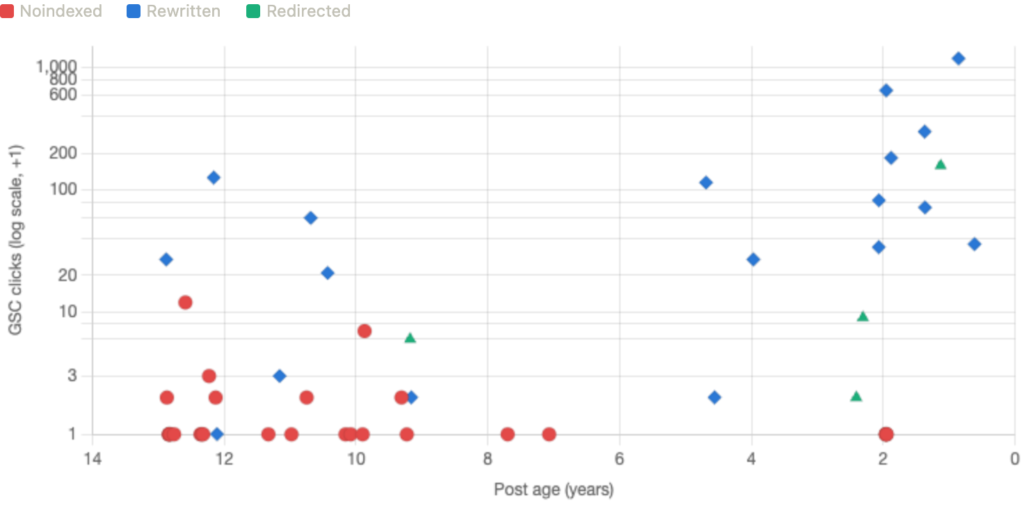
We ran a full crawl of the blog, pulling publish dates and GSC performance data (clicks and impressions) for every post, alongside a content similarity score to flag posts that were duplicating or drifting off-topic from what they were originally meant to rank for. Lining dates up against performance made the pattern obvious: some old posts were still earning traffic or ranking for keywords worth building on, and a lot of others were old and producing nothing. This report made it easy to identify old blogs to noindex, and which ones to update.
Step 4: Reinforced Transactional Keyword Signals with Title Tags & Links
A page can only rank as well as the signals pointing to it are clear, and those signals come from more than one place: the page itself, the links pointing to it, and the paths connecting it to the rest of the site.
To send these signals clearly, we started with keyword research across the brand's PLPs and PDPs to identify primary and secondary transactional keywords for all money-making pages. Then, we rewrote title tags to lead with real purchase intent instead of stacking in every term a page might rank for. Title tag optimization is one of the oldest levers in SEO, and it's a reminder that not everything in this strategy needs to be new to work.
We paired that with two supporting moves. Starting with identifying and recapturing broken backlinks pointing to dead or redirected URLs, we recovered link equity that was pointing nowhere. Then, we built internal links between blog content and relevant PLPs, using the previously identified keywords for rich, descriptive anchor text rather than generic phrases like "click here," so the links themselves reinforced the same keyword signals search engines were already picking up from the page content. On their own, none of these three tactics is new. Together, they made sure every signal on and around the site was pointing the same direction.
From the Client's Perspective
"What we value most is that Uproer doesn't just report the data, they explain what it means and why it happened. They helped us understand how Google and AI search were shifting, and turned that into a strategy that grew our revenue."
- From Marketing Director
Step 5: Published New Content to Position the Brand Toward Competitor Comparison Conversations
Rather than chase a long tail of broad topics, the content strategy focused on depth: a small, focused product line, covered well. That focus shaped what got built next.
This brand published new blog content around competitor comparisons within their industry, the kind of research someone does before spending real money on a product they'll live with for years. That content is already earning AI Overview citations on head-to-head comparison queries between two well-known category competitors, a real, early signal that the content is being trusted as a source worth pulling from. Being recognized by name inside those citations is the next stage of this play, and one of the clearest opportunities sitting in front of this strategy right now.
The Results
The headline numbers are the ones that matter most here: organic traffic is down 9% year over year in the last 90 days, while organic revenue is up 76% in that same window. That's not a contradiction. It's what happens when visibility stops living exclusively in a click.
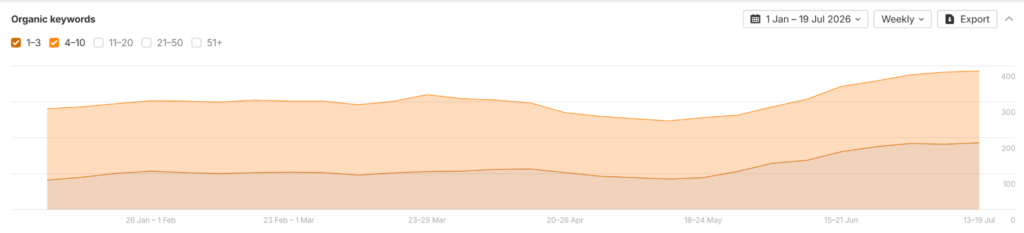
AI Overview citations climbed steadily all year, up 151% year to date. That kind of sustained visibility doesn't just sit in a search results page, it changes how people discover and remember a brand before they ever visit the site. Someone who sees a brand cited in an AI-generated answer today doesn't always click through in that moment. They often come back later by searching the brand name directly, typing in the URL, or landing on the homepage instead of a deep product page.
This is a pattern showing up across the industry, not just here. AI platforms don't pass along attribution data the way a normal referral click does, so there's no line item in an analytics report that says "this session started with an AI Overview." What analysts are increasingly pointing to instead are the downstream signals. These include branded search, direct traffic, and homepage visits, which tend to rise alongside AI visibility because that's what brand discovery looks like when it happens somewhere traditional SEO reports can't see. This brand’s data lines up with exactly that pattern:
| Metric | 𝚫 YoY (May-July) |
|---|---|
| Organic Traffic | -9% |
| Organic Revenue | +76% |
| Branded Clicks | +26% |
| Homepage Organic Traffic | +102% |
| Homepage Organic Revenue | +86% |
| Direct Traffic | +18% |
| Direct Revenue | +44% |
Read together, this isn't a site losing relevance. It's a brand showing up in more places before a shopper ever lands on a specific page, in an AI Overview, in a branded search, straight through the front door. The main product collection page is still declining, and that's fine. Google is routing more specific queries to the homepage or a more relevant collection page instead, which is a sign the site's intent-matching improved, not a red flag.
The Takeaway
Traffic used to be the metric that told you whether SEO was working. It still matters, but it's no longer the whole picture, not when a shopper can learn everything they need about a brand before a single session ever gets logged. This brand's traffic fell and their revenue grew because the strategy stopped chasing clicks and started building visibility everywhere a buyer might actually be looking.
Visibility is the new currency. Rankings still matter, but they're just one place to spend it.
If your traffic is sliding and you're not sure whether that's a real problem or just what search looks like now, we can help you find out. Book an intro today.